Safe Nepal After Earthquake

Safe Nepal After Earthquake

Safe to visit Nepal

Safe Nepal

Introduction :-

Civil society, Unesco and different wings of government have come together to help preserve, and restore, damaged heritage structures. “Major monuments in Kathmandu’s seven World Heritage Monument Zones were severely damaged and many collapsed completely,” the report said. The zones comprise the Durbar Squares of Hanumandhoka (Kathmandu), Patan and Bhaktapur; the Buddhist stupas of Swayambhu and Boudhanath; and the Hindu temples of Pashupatinath and Changu Narayan. The revenue loss from ticket sales for the first year alone was estimated at $6 million, the report said. “It was the people who first came to the rescue of their heritage sites,” says Kai Weise, a conservation architect. He traces this spontaneous reaction to Kathmandu valley’s ancient Guthi system of local kinship organization, which was responsible for the upkeep of community-owned monuments. Clearly, a sense of responsibility remains. During more uneventful times, organizations like the Kathmandu Valley Preservation Trust (KVPT) have been working in tandem with the archaeological department—in the KVPT’s case, since 1991. The tremors took a toll on the Patan Durbar Square, which has been under the KVPT’s care—six monuments suffered major damage. The first step, says KVPT Nepal programme director Rohit Ranjitkar, was to salvage what they could, and store it properly. Some portions where restoration work had started before the earthquakes had been documented completely, so work on these could begin immediately. Like Patan Durbar Square’s Sundari Chowk, an architectural and sculptural masterpiece that was under restoration when the earthquake knocked off the first floor of its eastern wing. Care has been taken to maintain authenticity during the restoration, while also strengthening the structures against future seismic shocks. The restoration of the first set of buildings at this site—the Taleju Temple Tower and Sundari Chowk—is slated to be completed by the end of the year; work on others has just started, while yet others are still in the planning phase. The main stupa and the associated buildings of Swayambhu too suffered extensive damage. The shikhar of the Anantapur Temple in this complex fell and the stupa itself suffered cracks. This posed a challenge of sorts: Since Swayambhu is frequented by a large number of fairly bold and inquisitive monkeys, the material used to fill the cracks had to be monkey-proof. At the Hanumandhoka Durbar Square, the Panchamukhi Hanuman Temple and the south wing of the Malla Residential Palace were already slotted for restoration, so the documentation was complete, says documentarian Alok Tuladhar. The Panchamukhi Hanuman Temple is an outstanding structure with five concentric circular roofs, each ascending storey being of diminishing diameter. The earthquakes brought down its top storeys. Restoration work, recently completed, was undertaken on priority by the Hanumandhoka Palace Museum Development Committee and Nepal’s ministry of culture, tourism and civil aviation, with support from the US ambassador’s fund for cultural preservation. A lot, of course, remains to be done. One of the structures on which work is yet to begin is the Kasthamandap, considered a foundational structure of Kathmandu. Here too, some individuals are trying to help in their own way. A July 2015 report on Nepalitimes.com described how a Nepalese settled in the US, for instance, had collected and published information on the Kasthamandap, which had collapsed completely, in an attempt to facilitate the reconstruction process. The disasters, then, seem to have actually given a fillip to conservation. For it is in the loss of their heritage that the government, communities, civil society and expert groups are appreciating the foundational role heritage plays. It’s estimated that 31 of Nepal’s 75 districts were affected—14 of them, including Kathmandu valley, severely—in the 25 April and 12 May 2015 quakes that killed around 9,000 people and destroyed more than 700,000 homes. As many as 2,900 cultural and heritage structures were affected too, with damage estimated at $170 million (around Rs.1,232 crore now), according to a June 2015 report by the country’s National Planning Commission.


Mount Everest

Mount Everest

Mount Everest

Introduction :-

Sagarmatha takes its name from the Nepalese name for Mount Everest, which is located in the very north of the zone within the Sagarmatha National Park (1,148 km²) in the Solu Khumbu district. Sagarmāthā means "the Head in the Great Blue Sky". Sagarmatha is one of the fourteen zones located in eastern Nepal. It includes mountain districts of the Himalayas (including Mount Everest) in the north, hill districts in the center, and valley districts of the Terai in the south. It is bordered by China to the north, India to the south, the Kosi Zone to the east and the Janakpur Zone to the west. The main city of the Sagarmāthā Zone is Rajbiraj which is also the headquarters. Other towns of the Sagarmatha hill area are Katari, Okhaldhunga, Diktel, Salleri and Namche Bazaar; while Kathauna, Lahan, Fatepur, Rajbiraj and Siraha are in the outer Terai. Triyuga is an emerging city in the zone. Sagarmāthā takes its name from the Nepalese name for Mount Everest, which is located in the very north of the zone within the Sagarmatha National Park (1,148 km²) in the Solu Khumbu district. Sagarmāthā means "the Head in the Great Blue Sky".


Chitwan National Park

Chitwan National Park

Chitwan National Park

Chitwan National Park

Introduction :-

Chitwan National Park (CNP) is a world heritage property, and it also contains a Ramsar Site – Beeshazari Tal in its buffer zone. The CNP has a history of over 3 decades in park management and a rich experience in resolving conflicts between the park and the people. It is a rich natural area in the Terai, the subtropical southern part of Nepal. A total of 68 species of mammals, 544 species of birds, 56 species of herpetofauna and 126 species of fish have been recorded in the park. The park is especially renowned for its protection of One Horned Rhinoceros, Royal Bengal Tiger and Gharial Crocodile.


SWYAMBHUNATH TEMPLE

SWYAMBHUNATH TEMPLE

SWYAMBHUNATH TEMPLE
SWYAMBHUNATH TEMPLE

Introduction :-

Syambhunath is a temple of Lord Buddha and it ti situated about 3km west from central kathmandu. This temple is situatedon a hollock about 77km high from the ground level. There are two white dome shaped temple called Anantapur and pratappur on the either sode of the main chaitya. This place was listed by the UNESCo in the world heritage list. It is an ancient holy place and in addition its natural feautures are marvieous. The beautiful view of the whole kathmandu can be observed from swyambhunath. "swyambhu" means 'self-created'. It is said that in ancient times swyambhu appeared by itself as abeacon of light over a lotus with a thousand of petals and later on a stupa was erected above ethe site covering the light. It is also said that after the construction of swyambhu chaitya and concealment of Swyambhunath Jyotirupa (self-existing light) five Buddhas representing five colors of Swyambhi Jyotirpur appeared.
They were namely virochana Aksobhya Ratna Amitabha and Amagdsiddhi. These five Buddhas are enshrined around the main chaitya site. There are many temples in the Swyambhu site. But the main chaitya is one the worlds most glories Buddhist chaitya. It is said to be about 200 years oldPainted on the four sides of the spire bases are the all seeing eyes of Lord Buddha.
On the western side of the stupa there is a pagoda style temple that houses the lord goddes Harati. This goddes is believed to take care of sick children. Close to the Swyambhunath lies a Tibetan Monastry which was founded quite recently (1904AD) it houses a large gold image of Shakyamuni Buddha. At the beginning of staircases on the eastern side of the Swyambhunath hills there are huge statues of Aksobhya Buddha and as one ascends further there are 3 more huge statues close to the Swyambhu hill is a small hilllock with 1500 years old temples of Manjushree. The main stupa of Swyambhu is surrounded with prayer wheel with Tibetan Mantra 'om mani padme hon'.

Pashupatinath Temple

Pashupatinath Temple

Pashupatinath Temple

PASHUPATINATHE TEMPLE

Introduction :-

pashupatinath is the temple which has unified all the Hindu people of Nepal as well as other country. It unifies 86% people of nepal . It is situated in the northern part of Kathmandu valley. It lies at the western side of Bagmati river. The pasupatinath temple is the largest Hindu temple and is considered to be the holies of all Hindu temple. This temple is tired with two golden roofs and the doors are made up of silver. There are directions mostly the western door is open. A famous and most venerated Shivalya is enshrined in the temple. This temple was built by on of the ancient kings and has got a historical significance.
It is dedicated to Lord Shiva, one of the 3 most important gods in Hindu religion. Pashupatinath is built in the typical Nepali style. The four glided doors enhances its attractions, The western door is kept open whereas other doors are opened in special occasion only. It has been housing traditional art and architecture of Nepal. It explains the civilization and setttlement of kathmandu valley. IT also explains the inter relationship between nature and culture.The great forest Bagmati river and other natural scene have decorated the pashupati complex. In the pashupati premises there temples of number of god and goddesses like Bhairab, Ananta, Naryan, Kageshori, Yamraj and Ganesh. But the main temple is pashupatinath and Guheswori. Several shrines and idols were established in this temple by different kings of nepal. The golden foof on it were made by King Shiva Dev the idols of Lava Kush in it were established by King Jaya Prakash Malla.The kotilinga in it was made by king Siddhi Narasimha Malla. so, different kings have put their effort in making pashupatinath temple. Many huge gatherings.

Patan Daubar Square

Patan Daubar Square

patan durbar square
PATAN DURBAR SQUARE

Introduction :-


Patan Durbar Square is situated in the mangal Bazar of Lalitpur Municipality of Lalitpur district. This square is located at 5km southeast of Kathmandu and consists of palaces of Malla kings and temples. There are fine pagoda and shikhara style temples, stone statues and unique artistic Newar architectures in this durbar square.
The palaces and temples were built during Malla period. Also known as Lalitpur of Yala De(Newari) this square is full of Hindu temples ans Buddhist monuments. This diversity of the mediaeval culture that allowed both Hindusism and Buddhism to flourish has left a rich legacy of impressive sightseeing.


Main Attraction :-

One of the most popular site of patan durbar square is the shikhar style krishna mandir which was built by king Sidhi Narsing Malla in the 17th century. It is supposed to be the 1st specimen of shikhara style temple all madein stone. Most important seence from the asient Hindu epics like Mahabarat and ramayana have been engradesid on its frizes.


Patan Museum :-

The museum inside the durbar and specalizes in bronze ststues and religions objects. It is situated in keshav naryan chowk. It was actually opened in 1997 but the building it is situated in dates itself as made in 1734. It is considered as one of the best museum in asia as a whole.

Main chowks :-

The main attraction of patan durbar square is the ancient royal palaces indeed. It consists of three main courtyards (Mulchowk, Sundaru chowk, and mani chowk, Naryan chowk ). The northeastern corner of the mulchowk is the 3 storied octagonal temple of taleju bhawani built by king Shree Niwas Malla in 1667. the sundari chowk holds in its centre a masterpiece of stone scuptures popularity known as Royal Bath, between central mulchowk lies a temple of Degu Taleju looking out into the main square.

Lumbini

Lumbini

lumbini
LUMBINI

Introduction :-

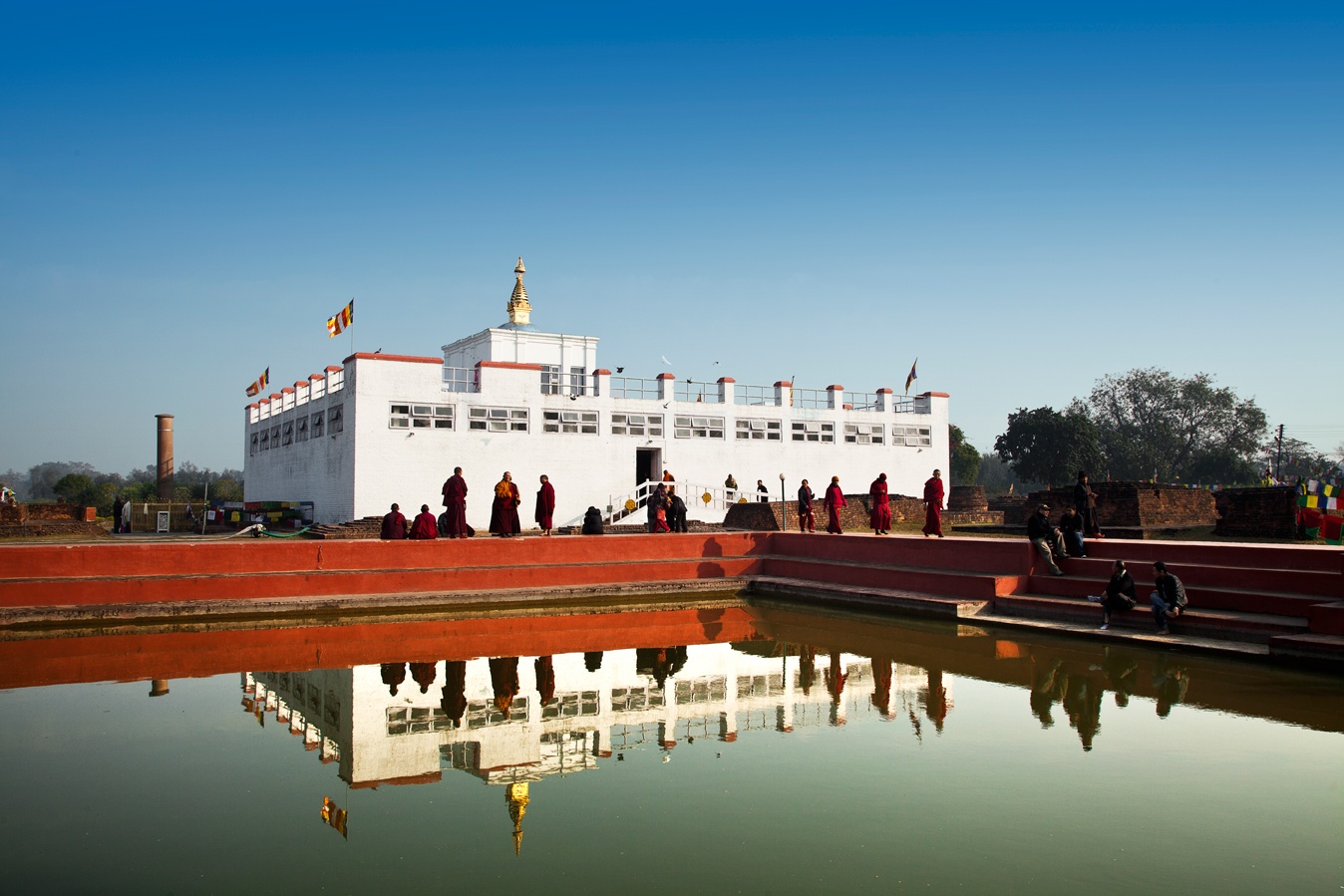
Lumbini is the most scared place for Buddhist as well as a glories spot for the country because Sakyamuni or siddhartha Gautam of Lord Buddha was born here in 623 BC for centuries Buddhust all over the world knew that Lumbini was the birthplace of Lord Buddha,Though its exact location was unknown. The Chinese pilgrims pf ancient times Huan Tsang and Faeitian indicted to this are says, Lumbini where Lord was born is a piece of heaven on Earth and one could see the snow-covered mountains among the splendid garden embedded with monastries and stupas. Though the pilgrims described the location its exact location still remained uncertain still obsccure untill Dec 1st 1886 in 1886 German Archaeologist Dr. Alois A.Furthr came across a stone pillar and a ascertained beyond doubt that it is the birthplace of Gautam Buddha.
The Ashoka pillar discoverd by the German Archoelogist Dr.Fuhrer is the first epigraphic evidence relation to the lifehistory of Gautam Buddha. It is also the most visible Landmark of the Lu?i Garden. It is said that hte great Indian Impreor Ashoka visit this area on the twentieth year of his ascenancy to the throne and erected this pillar as homepage to the birthplace of the Lord and this visit to this scared place. The inscrption the pillar confirms that the location of Lumbini garden as the birthplace of Lord Buddha. the inscription reads 'Sakyamuni Buddha the blessed one was born here". The inscription engraved on the pillar indicates the historical evidence that Lord Gautam Buddha was born in Nepal in addition to the pillar another important shrine is the bas relief statue of Maya Devi Enshrined in Pagoda the image shows Mayadevi mother of the lord supporting herself by holding on with her right hand to the branch of a sal tree with newly born Buddha standing upright an a lotus pesdestal on oval halo. Earliest the image of Mayadevi temple was currently dismanted to make way for further excavations which revealted the sanctum the excat spot where Buddha was born.

Kathamandu Dubar Square

Kathamandu Dubar Square

Kathmandu Durbar Square
KATHMANDU DURBAR SQUARE

Introduction :-

Kathmandu Durbar square is situated at the heart of kathmandu with old temple palaces, spectcular images and other unique construction. The name Hanuman Dhoka square comes from the big statue of Hanuman (the legendary monkey god mentioned in Hindu epic, ie.Ramayana) Dhoka means the gate to the royal palaces. The royal palace dates back to the 14th century. The Hanuman dhoka durbar square is the Historical seat of royality where the kings are crowned and their co-ordinates are solemnized. Noticing its important UNESCO listed in the world heritage in 1997.


Main Attractions :-

  • Kumari Ghar :-

  • Kumari (vestal vergin) or the living goddess who represents a very ancient Hindu diety of Nepal locally known as Taleju is Buddhist by birth. The temple of kumari is situated in the vicinity of Hanuman Dhoka Palaces. The building has intricately carved wooden balconies and Windows screens. This building was built in 1757 by King Jaya prakash Malla.

  • Kasthamandap :-

  • Located near the temple of kumari it is said to have been by king Laxmi Narshimha Malla in 16th century. It is said to be constructed from the wood of a single tree. The city of kathmandu drives its name from this temple.

  • Jaishi Dewal :-

  • A five minute wake from the Kasthmandap is the shiva temple of Jaishi Dewal which is famous for its erotic carvings it is still one of the main routes of the chariot festival of Indra Jatra and other festivals.

    BOUDHANATH TEMPLE

    BOUDHANATH TEMPLE

    BOUDHANATH TEMPLE

    BOUDHANATH TEMPLE
    Introduction :-

    Boudhanath os situated at Chabahil of Kathmandu municipal city. It is the holiest pilgrimage site for Buddhist. The Buddhist Bihar and statues in Boudhanath and in Surroundings in artistic and impressive. the are of Boudhanath os also named as 'Litle Tibet' of nepal by the tourists because it influence Tibetan Culture. The 36m tall Buddhust Stupa has been erected and covers an area of 82.38m*82002m. The main entrance lies in the north side. In this area there are 3 path to go round the Bouddha.

    The three parts are in the form of three layers or stairs. The saries have been constructed to reach the sanctum on the both sioes of northern part of the stair. There are figures of the guards Bajrapani and Khadegpani on elephant, the state statue reflects in influence if Tibetan culture. Two eyes and Pancharastimi are portyard. There is belife that through eyes of Bouddha's sight look every one after the 4 squared parts there are 13 layers. The 13 layer represent the wheel in the philosophy to attain the state of Bouddha the 13 layer of knowledge have to be crossed on th top of 13 layers. The pancha Buddha.

    Changu Narayan Temple

    Changu Narayan Temple

    CHANGU NARYAN TEMPLE
    CHANGU NARYAN TEMPLE

    Introduction :-

    Changu Naryan is among one of the kathmand valley. situated 18 km east of kathmandu city and stending 1541 meters above the sea level, this monument is significent from religious cultural historical archeological view-points. The site is termed with different names such as Champakarnaye, Dolashiker, and Dolaparvat but it is famous with name of Changunaryan.

    This site was built by king Haridutta Verma in 325AD. The lord residing in this place is worshiped by the Hindus as Garuda Narayan. This temple is one of the glories example of the splendors of the golden days of lichavies.

    Bhaktapur Dubar Square

    Bhaktapur Dubar Square

    Bhaktapur Daurbar Square

    BHAKTAPUR DURBAR SQUARE

    Introduction :-

    Situated at an altitude pf 1401m Bhaktapur covers an area of four square miles. 'Bhakta' means 'devotes' and 'pur' means 'city' so, Bhaktapur means city of devotes.Devotes still remain a medieval chorm and visitors to this ancient town are treated to myraid wonders of culture and artistic achievments. The past if glory of the mall rules continues to be reflected at the Durbar Square.


    Main attraction of Durbar Square :-
    1. The Golden gate :-

    2. It is main intrance of the main courtyard of the 55 windows places.
    3. The Big bell :-

    4. There is a bronze bell on the terrace of the stone temple of Bastala Devi, it is also known as 'Bell of the Banking dogs'.
    5. The National Art Gallery :-

    6. It contains ancients and medieval paintings belonging to hindu and buddhists schools depicting tantrism of various periods and also the descriptions.
    7. Dattatraya Square :-

    8. The square takes it names from the Dattatraya temple. The square is famous for ornate monastries known as maths.
    9. Bhairavnath temple :-

    10. This tempe was first built as a one-story pagoda but was later changed into a tree storey temple in this by kind Bhupatindra Malla.
    11. Nyatapola temple :-

    12. This five storey pagoda was built in 1702 AD by king Bhupatindra malla.

    Ads

    Copyright © 2015 Visit Nepal - Template by Arlina Design - Sponsored by Caramenghilangkanmembuat | Distributed By Gooyaabi Templates